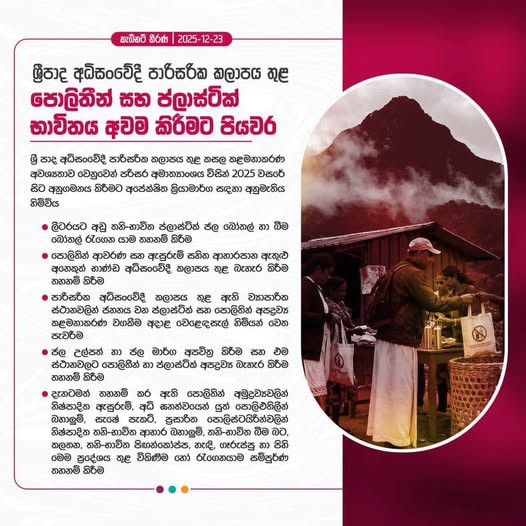
The Cabinet of Ministers has approved strict measures to minimize polythene and plastic usage within the Sri Pada Sensitive Ecological Zone, effective from the 2025 pilgrimage season, as outlined in a recent infographic dated December 23, 2025. This decision targets the protected ecosystem under the Flora and Fauna Protection Ordinance, where waste management has become a critical concern during the six-month annual pilgrimage attracting thousands of devotees.
The new regulations ban the sale, carrying, and disposal of single use plastics including sachets, high-density polythene bags, expanded polystyrene food containers, straws, cutlery, cups, plates, and plastic water bottles smaller than one litre. Pilgrims and vendors must also refrain from polluting water sources or discarding plastic packaging from food, medicine, or other goods within the zone. Business operators bear responsibility for removing waste generated by their activities, transporting it outside the area for handover to local authorities.
These steps align with the "Clean Sri Lanka" national program's sustainability goals, building on pre-season cleanups by the Sri Lanka Army and Special Task Force, plus volunteer drives at Nallathanniya and Palabaddala entrances. Environment Minister Dhammika Patabendi emphasized balancing sacred pilgrimage with nature conservation, stating devotees cannot worship while harming the environment. The 2025 season, themed "Muni Siripa - Green Pilgrimage," promotes larger reusable bottles and eco-friendly alternatives.
This initiative ensures Sri Pada's pristine ecosystem remains protected for future generations while maintaining pilgrim access.